


Signature Periodontics & Implant Dentistry
Diabetes and Oral Health – A Two-Way Street
 If you, a friend or a family member have diabetes, you may have heard that this common disease increases a person’s risk of gum disease and other oral health problems. But did you know that this relationship is a mutually distressing one? Not only does diabetes make gum disease worse, but gum disease can actually make diabetes worse too by interfering with blood-glucose management strategies.
Here, we shine some light on the relationship between diabetes and oral health, and what you can do about it.
Diabetes makes it difficult for the body to fight infection. Whether the infection is located in the mouth, the leg or any other part of the body, poor circulation suppresses the immune system, making it harder for the body’s natural infection fighting responders to do their job. This means that if you have diabetes, you are more prone to gum disease, and other oral health problems too such as thrush and dry mouth.
On the flip-side, gum disease can also make diabetes worse. Whenever the body is fighting illness or an infection (such as a cold or the flu or even gum disease), blood sugar spikes are harder to control with regular methods and thus extra monitoring and control-measures are required.
Are you wondering what you can do to minimize this damage? First and foremost, keep your blood sugar under control using the methods that your physician has prescribed. Next, practice good oral health maintenance with regular brushing and flossing. And finally, don’t skip regular trips to the dentist and other oral health professionals. If you have diabetes, you cannot afford to ignore this important part of your body.
Bacteria’s Great Odyssey
 If a tooth’s pulp, the innermost layer, becomes infected it is in grave danger. Without proper prevention or early treatment, the tooth can die and fall out. So how does a tooth reach this ruinous point? In this blog post, we will examine bacteria’s journey to infection of the pulp.
Bacteria Packs its Bags, Forms Plaque
As we all know, certain bacteria found in the mouth can cause serious problems. These harmful residents are gluttons for the lingering sugar in your mouth and produce an acid byproduct that strips enamel and weakens teeth.
Bacteria Makes Friends With Common Goals: Tooth Decay
Bacteria then groups together to form plaque (a clear, sticky film) and tartar (hardened plaque) which will adhere to teeth in the absence of proper hygiene habits. Beyond their sticking power, these substances allow bacteria to dwell in one area so all the damage they do is very concentrated. Accordingly, tooth decay in these areas can occur rapidly, causing a cavity.
Bacteria Meets Its Final Destiny in Our Office
Thankfully, this infection spread can be halted with preventative hygiene habits and treatment of any dental cavities. If you suspect you have bacteria embarking on the journey described above, schedule an appointment as soon as possible. As with all ailments, early diagnosis is your best course of action.
Dental Implants- Five Things You May Not Know
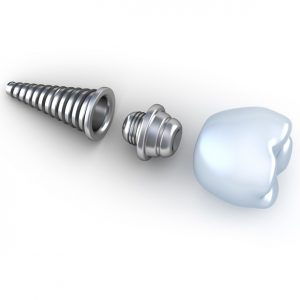 How much do you know about dental implants? With the increasing popularity and availability of dental implant surgery worldwide, patients are gaining more and more knowledge about dental implants every day.
But did you know these five important facts?
- Dental implants are appropriate for almost all ages. Not just for the elderly, dental implants are frequently placed even in the mouths of young adults. As long as the jaw has stopped growing (after puberty; age 16 for girls and age 18 for boys), a dental implant can be placed with great success.
- The titanium post actually fuses (osseointegrates) with the natural jawbone. They grow together to form a stronger foundation for replacement teeth. So dental implants actually improve the bone structure in the jaw, they don’t just fill it in.
- The “dental implant” is actually just the titanium post, one of three parts of the whole process. Other parts used in the full procedure that we think of as “dental implant surgery” are known as the abutment (the connector) and the actual replacement tooth itself (the crown).
- Dental implants preserve jawbone, whereas other teeth replacement options can lead to bone deterioration. Bone is similar to muscle in that it must be used in order to maintain its mass. When a tooth goes missing and the site is left untreated, the jawbone underneath tends to deteriorate. Dental implants eliminate this problem by securing a natural-like tooth right into the jawbone and thus utilizing (and preserving) that area of bone.
- Dental implants protect their neighbors. By contrast, a traditional, tooth-supported bridge involves the grinding away of the teeth on either side to act as a hammock for the bridge. With dental implants, the jaw is the anchor and support for the artificial tooth.
The bottom line? Dental implants offer a safe and manageable alternative to traditional tooth replacement methods.
A Clean Tongue 101
 Did you know that 50% of the bacteria in your mouth live on the surface of your tongue? Also, a tongue cleaning is the single most important step you can take toward diminishing bad breath.
We all know just how important brushing and flossing is to our oral health, and sometimes tongue scraping takes a seat behind these important steps. However, tongue scraping is just as important! The best way to rid you of bad breath is by scraping the smelly bacteria off. While scraping off tongue bacterium sounds somewhat gross, imagine all the bacteria just sitting on your tongue!
The tip of your tongue is less likely to harbor odor-producing bacteria since it constantly comes into contact with your hard palate when eating and speaking. The friction and contact creates a cleansing action that prevents debris build up. However, the back of your tongue only touches your soft palate, and results in a build up of bacteria. Even if you stick out your tongue while looking in the mirror, you’ll see white, or even a brown colors on the surface of the back of your tongue.
Brushing your tongue is better than not paying any attention to your tongue, but there are other much more effective ways to get your tongue to be squeaky-clean. If you do choose to use your toothbrush, gently move the toothbrush from back to front and along the sides. Try to brush as far back as possible to get all the gunk on the back of your tongue. Be careful, you might find that you have an active gag reflex, but don’t worry there’s a good chance it will diminish over time.
Another option is using a tongue scraper. Many people find that scraping the tongue is much more effective than brushing. You can either purchase a tongue scraper in the toothbrush aisle of your local drugstore, or even use a spoon from home! Just moisten the spoon, turn it upside down and place it at the back of your tongue and drive it forward. You’ll notice that using a tongue scraper/spoon has less of a tendency to gag.
Daily tongue cleaning is a well-established practice in many cultures, however is much less spoken about in the US and Canada. Since cleaning your tongue is relatively easy and quick, we recommend that the tongue be cleaned both morning and evening. According to studies, practicing good tongue cleaning is especially good if you have significant stress, as tongue coating tends to increase during stress. In addition to your tongue cleaning, be sure to brush and floss your teeth daily!
Dental Implants – Are They Right for You?
 Not everyone is blessed with perfect teeth. Many people would tell you they lack the smile they’ve always wanted due to genetics, disease, and sometimes even accidents. Fortunately, we have a solution. With dental implants, you will no longer feel self-conscious about your smile; but rather delight in having a new and improved grin!
What are dental implants?
Technically, dental implants are replacement roots for missing teeth. First, the implant, a titanium screw, is inserted into the jawbone. Next, a removable or permanent replacement tooth is attached to the top of the implant to mirror the appearance of your natural teeth. Currently, over 3 million people worldwide have dental implants and the technology has reached a point where each procedure has a 98% success rate.
Why should I get dental implants?
Beyond simply improving the appearance of your smile, dental implants include many other benefits:
- Oral health: Unlike other restorative procedures, dental implants do not necessitate the reduction or alteration of neighboring teeth, thus resulting in improved oral health overall. Additionally, dental implants do not interfere with access to neighboring teeth, so it is no harder to brush or floss.
- Longevity: While other dental aides such as dentures and bridges inevitably require replacement, dental implants are extremely durable, lasting many more years and in some cases even a lifetime!
- Convenience: Dental implants do not ever need to be removed for activities such as eating, drinking and brushing, and do not require adhesives. They act, look and feel just like natural teeth!
How much do dental implants cost?
Dental insurance does not always cover the cost of dental implants. However, in the long run, dental implants are usually cheaper than other restorative procedures. Because they do not need to be replaced, the initial investment for implants is well worth the price.
Dental implants are becoming a popular trend in the world! Call us to set up an appointment to upgrade your smile!
Crown Lengthening to the Rescue: When Gums and Teeth Need an Intervention
When the gum to tooth relationship has deteriorated, you may hear us suggest a procedure called “crown lengthening”. Many patients are a little bit hesitant about having this procedure done because it’s a relatively new idea. They simply aren’t sure what it is and more to the point: they aren’t sure why they have to have it. So if you have an upcoming crown lengthening procedure scheduled, read on to find out why we might be doing it and what to expect.
 What is Crown Lengthening?
The idea behind crown lengthening is to expose more of the tooth or bone under the tooth by contouring and reshaping your gum tissue. This restores a good “gum-to-tooth relationship” (so that more tooth is showing).
Why am I having this procedure?
Sometimes crown lengthening is done for aesthetic reasons, for example to reveal more pearly white teeth when a patient is concerned about an overly “gummy” smile.
Other times, crown lengthening is necessary if we need to install a new crown or perform other restorative work in the area but there simply isn’t enough tooth showing for us to work with.
What’s the big deal about crown lengthening?
Crown lengthening is a great improvement when you consider the old way we used to deal with this issue which was to remove what was left of the tooth and use a removable denture instead. Now you get to keep your naturally rooted tooth and we will install a more or less permanent crown – no dentures to deal with!
What is the procedure like?
Usually it can be done in less than an hour, depending on how many teeth need work. Also, typically the procedure can be done under local anesthesia so you can be in and out on time!
Still have questions? Call us today to ease your anxieties about this smile-transforming, modern procedure!
Can My Dental Implants Get Cavities? And Other Common Questions….
 In my practice, I hear dozens of questions every day about dental implants from concerned (or simply curious) patients. Every one of those questions is a good question and I always try to provide an equally good answer. To help you better understand an upcoming dental implant procedure, we’ve compiled a top-five list of the most common questions about dental implants that we field in our office every day:
1. Can dental implants get cavities?
- Because the implant-restored crown is an artificial (not natural) material, it cannot grow cavities, phew! However, you still need to have regular gum care and cleanings around the implant site just like you would for a natural tooth.
2. Can implants slip or fall out like dentures?
No. The artificial tooth (crown) is attached to the permanent titanium post that is set in the jaw. They will not slip around or fall out like you may have experienced with dentures.
3. Can I sleep with my dental implants in?
Yes! They are practically “permanent”, unlike dentures. You do not need to remove and soak them overnight.
4. Aren’t dental implants more expensive than bridges and dentures?
It depends. If you are talking about just a few teeth, implants may be cheaper over time than bridges because they last longer. However, if you need a whole row of teeth replaced, dentures may be a less expensive option for you. Each case is unique, however, so be sure to call us for a proper consultation. We are here to help you understand your costs and benefits so that you can make an informed decision.
5. How long will my dental implants last?
If implanted and cared for properly, dental implants can last for many decades or possibly even a lifetime. Some implants have been in patients for over forty years!
Don’t see your question on our list? Contact us today for quick answers!
Dental Implants: Changing the Way We Treat Missing Teeth
 Dental implants are rapidly becoming the standard of care in how we, as dental professionals, deal with missing teeth. And while the incidents of adults losing permanent teeth has been declining for decades, there is still a good chance that at some point in your life you too will require treatment for a lost permanent tooth.
The way this was treated in the past was by one of two methods. The first method was to install a bridge. The second commonly used method was dentures. But both of those methods present their own challenges and hassles to patients. Thankfully, dental implants have improved so much over the years that more often than not they are a better choice for a patient’s oral care plan.
Here are our top five reasons that dental implants have a leg up on their old competitors.
- Almost Natural: Dental implants are so sturdy that they feel and function just like a natural tooth. This is achieved by inserting a screw into the jaw which is allowed to bond with the bone in that area.
- Longevity: Dentures are a long term solution and have the ability to last a lifetime when properly placed and taken care of. By contrast, traditional bridges last only about 5-7 years.
- Fully Functional: Unlike dentures, which have a tendency to slip or feel uncomfortable and might even cause worry about possible embarrassments in public, dental implants don’t move when you are eating, talking or moving around.
- Face Shape Protection: When a permanent tooth is lost, over time the face and smile can sag. Dental implants fill in those spaces and allow you to keep your natural face shape longer!
- Keeps your Jaw in Shape! Dental implants actually stimulate natural bone growth when set in the jaw. Without them, the jaw gets lazy and can deteriorate.
If you have a site in your mouth where you are missing a tooth and have been wondering what to do about it, give us a call today for a consultation to see just how great dental implants can be!
Considering An Upgrade to Dental Implants?
 Have you been thinking of upgrading your current tooth replacement strategy but aren’t sure where to start? This is a great time of growth in modern dentistry, especially when it comes to replacing missing teeth! With the evolution of dental implants, patients don’t have to suffer some of the pains of the past when older, traditional tooth replacement methods were used.
Traditionally, missing teeth were always “fixed” with bridges or dentures. And while both of those procedures are still in use by dentists and do still serve an important purpose, they often cause unintended problems in the mouth that modern dental implants may be able to alleviate, or avoid completely.
What is a dental implant, you may be asking? At the most basic level, a dental implant is simply a prosthetic tooth that is mounted to a metal post which is screwed into the jaw bone. The procedure is typically done in two visits. During the first procedure, a titanium screw is inserted into the jawbone, where it is allowed to “settle in” and bond, a process that takes about six to eight months. After that, the dentist creates a prosthetic tooth and attaches it to the titanium post for a fully functional (yet fake) tooth!
The benefit of dental implants is that, unlike dentures, they are almost unnoticeable by the patient. Anyone who has had dentures knows that they tend to slip and wear down and sometimes even cause mild pain or discomfort. With dental implants, you will not even know they are there. They function just like a natural tooth in your mouth, no slipping, movement or separate cleaning required. Similarly, patients who are used to receiving bridges may benefit by an upgrade to an implant as bridges have a tendency to invite bacteria and infection, requiring additional replacements.
Whatever your concerns about dental implants are, we are here to help. Give us a call today to see if dental implants might be right for you!
Calming Your Nerves Before Dental Procedures
 Almost everyone has some feelings of nervousness when thinking about visiting the dentist. We hear it all the time from our patients. But don’t worry (I know, easier said than done). It is totally normal to have a bit of anxiety (or even a lot of anxiety) before you come to our office.
In our office, we have many years of experience in dealing with nervous patients. So to help you out, we’ve compiled this quick yet effective set of tips for dealing with those inevitable nerves before your dental procedure.
- Let us know! Sometimes just saying the words, “I’m a little bit nervous” can help by normalizing the nervousness itself a little bit, which instantly releases some of that stress that has the tendency to build up in your system. It also alerts us, which is great! In fact, we might just be able to help by doing procedures a little bit differently than we normally would or even just by offering some words of encouragement and reassurance.
- Music – Ask us to turn up (or down) the music in your exam room if that helps. Or, depending on the procedure, you may even be able to listen to your own MP3 player while we work away. Ask us ahead of time to be sure the procedure will allow for this.
- Breathe – Did you know that consciously taking a breath instantly calls to action your parasympathetic nervous system which is the part of the brain responsible for calming you down? The good news is that you always have your breath with you, so don’t forget to use it! Just by paying attention to your breath, for example, how it feels coming in and going out and the other sensations it creates, you can access the calming center of your brain. An easy breathing exercise that can be used anytime, anywhere, including in the dental chair is to breathe in for 4 counts, then out for 4 counts. You will instantly feel better.
We hope you find these tips helpful in dealing with your dental fears. Just remember, you are not alone.